



Smaller, Non-Systemic U.S. Banks Most Concentrated to Non-Bank Lending
Click here to learn more.
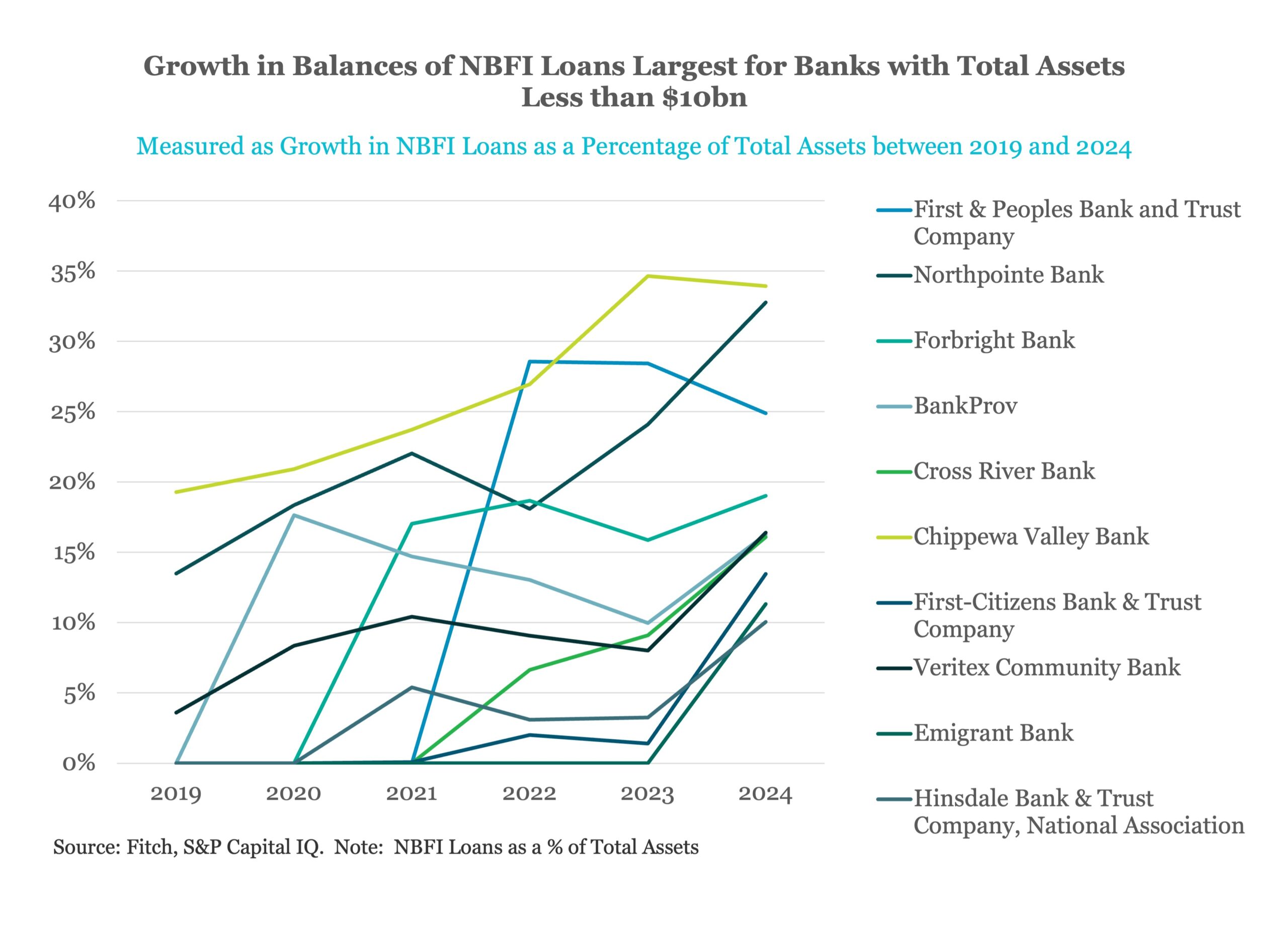
A relatively small percentage of U.S. banks provide loans to non-bank financial institutions (NBFIs), according to analysis of new regulatory data for the entire banking industry by Fitch Ratings. Around 13% or 576 FDIC banks reported balances of either NBFI loans or unfunded commitments, totaling over $2 trillion, most of which is held in domestic offices at March 31, 2025.
Of these 576 banks, 22 banks had concentrations greater than 200% of equity capital. Banks that are less than $10 billion in assets are not required to disaggregate balances of NBFI loans into five new categories: lending to mortgage credit intermediaries, private credit, private equity, consumer credit, and other.
Among the concentrated banks that disclose NBFI exposure into subcategories, they tend to have the most exposure to mortgage credit intermediaries, which is a relatively low credit risk given that mortgage loans are typically warehoused for a short period before being sold to the GSEs.





Latest news

Lack of new issues clouds CLO market
It’s been boom time in the leveraged loan market but now that market has eased off, what are the implications…

Multiples on PE buyouts
This quarter marks our integration of SPI by StepStone as the primary source for US buyout valuation metrics for the PE Breakdown.

US Leveraged Loan Issuance Slows to $76.5b in July
The US leveraged loan market has continued to slow from the May level of $104.7b, with approximately $76.5b priced in…