



Median PE Hold Times for the U.S. Middle Market Drop
For the first time in years, private equity firms saw their U.S. median hold periods for middle-market portfolio companies decline over the past couple years. After climbing to unprecedented highs in 2014—six years for companies that were later exited via secondary buyout—last year saw medians finally decline. The uptick in PE-backed IPO hold time is more reflective of how few middle-market PE portfolio companies went public last year than anything else, and consequently is not as indicative of overall trends as the decline in comparable figures for SBOs and corporate purchases.
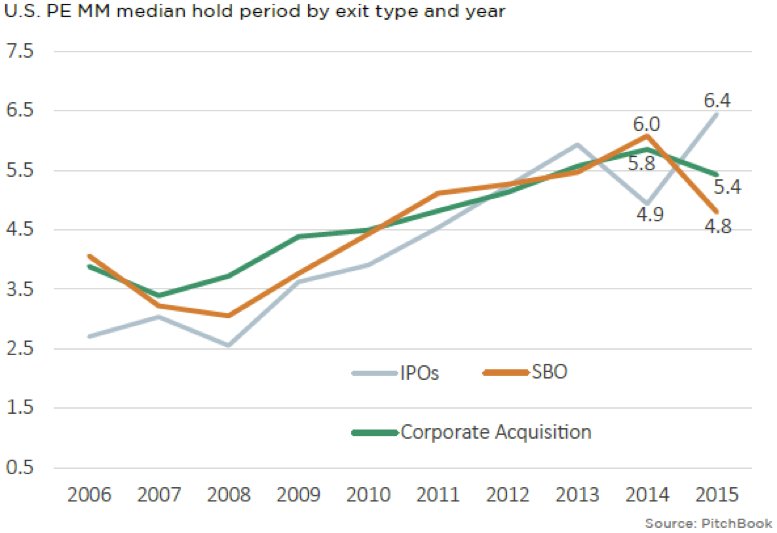
In fact, the latter is one of the primary drivers behind the diminishing hold period; as strategic buyers have remained hungry in general for M&A, PE firms have been able to unload their holdings at a relatively faster clip than before, particularly given last year’s M&A boom. The role of sponsor-to-sponsor transactions should not be underestimated, however. It’s telling that companies exited via that route hit a peak of six years in 2014, which is definitely on the longer side if not just outside it. And it’s even more telling that the median hold period for SBOs declined so quickly from 2014 to 2015. Some of the recurring narratives around PE’s highly active selling over the past couple years have included the need to exit aging portfolio companies and PE firms with capital that needs to be put to work eyeing fellow PE-backed holdings, both of which are doubtless at play here. Another factor driving the decline is the increase in PE firms targeting particular niches, building up operating teams and structuring synergies accordingly. Such firms can take over another PE-backed company and enhance value where the prior owner may not have had the resources or niche teams to do so. Given that these figures are based on U.S. PE middle-market hold times, the trend of larger PE firms looking to smaller companies to add on to existing platforms has also contributed. Will these median hold times drop even further? It’s hard to say, but as stated earlier in this column, the quality of companies currently in the market is being scrutinized more carefully than before. But, at the same time, sellers are definitely looking to take advantage of current valuations while they still can, so there may well be a rush for the exit, driving down the median hold time even further across the two primary exit routes of SBOs and strategic buys. It will depend more on the latter than the former, in the end, given the relative proportions of exits via M&A as opposed to fellow PE firms.





Latest news

Rate hike expectations ease as term SOFR curve flattens
The CME six-month Term SOFR rate reached a recent high of 3.979% on July 28 before retreating to 3.837% as…

3Q26: New loan assets rise to 44% of total lending, a 3-year high
New loan assets as a proportion of total US loan volume make up 44% of the 3Q26 pipeline to date,…

North American GPs dominant as fundraising accelerates
Our PEI Private Credit 200 ranking also shows capital raising increasing overall – and accelerating especially fast for the largest…