



Will Aging Portfolios Still Drive PE Exits in 2016?
One of the primary storylines behind the private equity sellers’ market of the past few years has been the need for funds with aging holdings to liquidate as they threaten to drag down overall returns. As PitchBook data illustrates, as of the end of 2015, close to 8,000 U.S.-headquartered companies were backed by PE investors. Of that 7,918, over 2,500 were bought in 2008 or earlier, a hefty 33%. So right now, fully a third of that inventory is 7+ years old. And that’s even after the highly active selling seen in 2014 and 2015. Accordingly, from the supply side, it appears there won’t be any lack of PE-backed businesses coming to market this coming year. We’ve heard multiple accounts of sellers looking to take advantage of current valuations and consequently looking to exit sooner rather than later. In addition, apart from typical exit avenues such as sponsor-to-sponsor sales or corporate acquisitions, the secondaries market may well flourish even further.
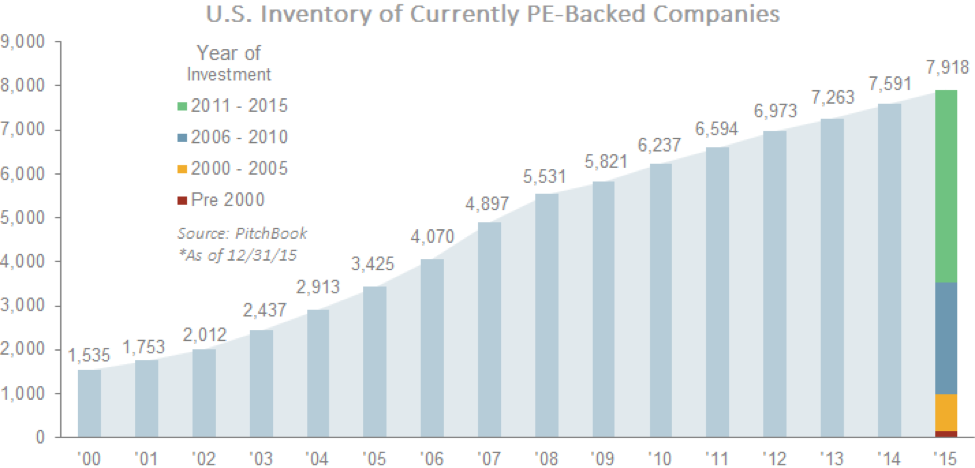
To add some perspective, investors in the funds containing these aging holdings are doubtless well aware that the global financial crisis—not to mention the slowness of the ensuing recovery—prolonged typical exit timelines, and consequently are willing to wait in order to achieve a better return. But the waiting period can only extend so far, and, moreover, if valuations are perceived to be potentially set for a decline, then there may well be additional pressure to achieve liquidity more quickly, within a reasonable price range. All in all, there is no lack of motivations for PE sellers to remain active.





Latest news

Rate hike expectations ease as term SOFR curve flattens
The CME six-month Term SOFR rate reached a recent high of 3.979% on July 28 before retreating to 3.837% as…
3Q26: New loan assets rise to 44% of total lending, a 3-year high
New loan assets as a proportion of total US loan volume make up 44% of the 3Q26 pipeline to date,…

North American GPs dominant as fundraising accelerates
Our PEI Private Credit 200 ranking also shows capital raising increasing overall – and accelerating especially fast for the largest…