



Despite all the talk of a “playground” in Europe for private equity buyers, we aren’t seeing the kinds of deal flow we might expect if we only read the headlines. We found a decline in buyout activity in the second quarter, which saw 261 control investments versus 332 in Q1.
Second quarter deal activity didn’t deviate much from previous quarters, even going back to 2011 and 2012. Obviously, economic uncertainties in Europe continue to worry PE investors. Another big factor, however, is the amount of debt that remains on the books of corporate balance sheets, especially in heavily indebted countries like Spain. Because many of those companies are already levered, buyout shops can’t add too much more debt to them to mitigate their investment risks.
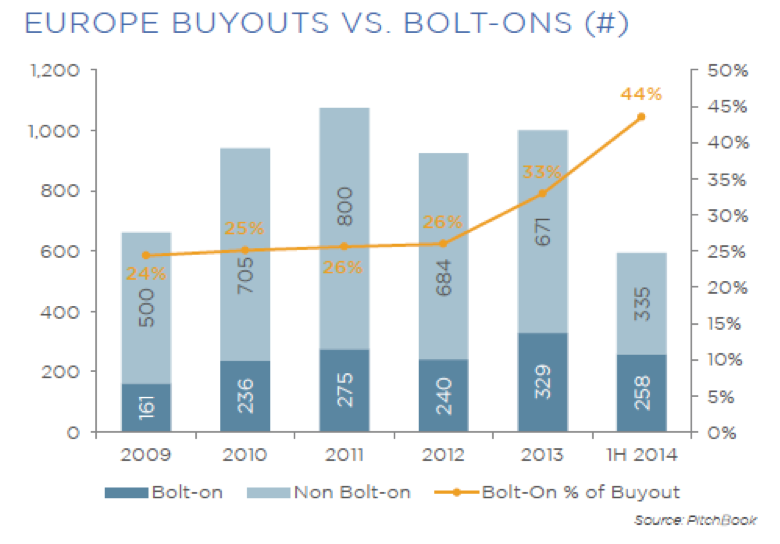
What we’ve seen more of in Europe, like in the U.S., is the ‘buy and build’ play. Bolt-on deals, as they call them in Europe, made up 44% of all buyout deals in 1H 2014, up from 33% last year and 26% in 2012. The strategy makes sense right now, given the low growth environment. Organic initiatives aren’t bringing in the kinds of returns PE firm need to make in a limited timeframe. Bolt-ons also make sense in Europe because of the multinational nature of the market; platforms can more easily expand across borders and markets via acquisitive growth. It also gives investors the chance to gobble up distressed companies that are struggling to thrive independently, but may operate better as subsidiaries of a PE-backed platform.





Latest news

Rate hike expectations ease as term SOFR curve flattens
The CME six-month Term SOFR rate reached a recent high of 3.979% on July 28 before retreating to 3.837% as…

3Q26: New loan assets rise to 44% of total lending, a 3-year high
New loan assets as a proportion of total US loan volume make up 44% of the 3Q26 pipeline to date,…

North American GPs dominant as fundraising accelerates
Our PEI Private Credit 200 ranking also shows capital raising increasing overall – and accelerating especially fast for the largest…