



US PE sellers slowly reducing inventory of aging portfolio companies
After climbing steadily for several years, the median hold period in the US by private equity firms roughly leveled off between 2013 and 2014. From there, the hold period for companies exited via IPO briefly leapt upward in 2015, only to plunge once more in 2016—more a reflection of the overall scarcity of IPOs in the US in the first half of 2016 than anything else—while hold periods for companies exited via secondary buyouts and strategic acquisitions fell.
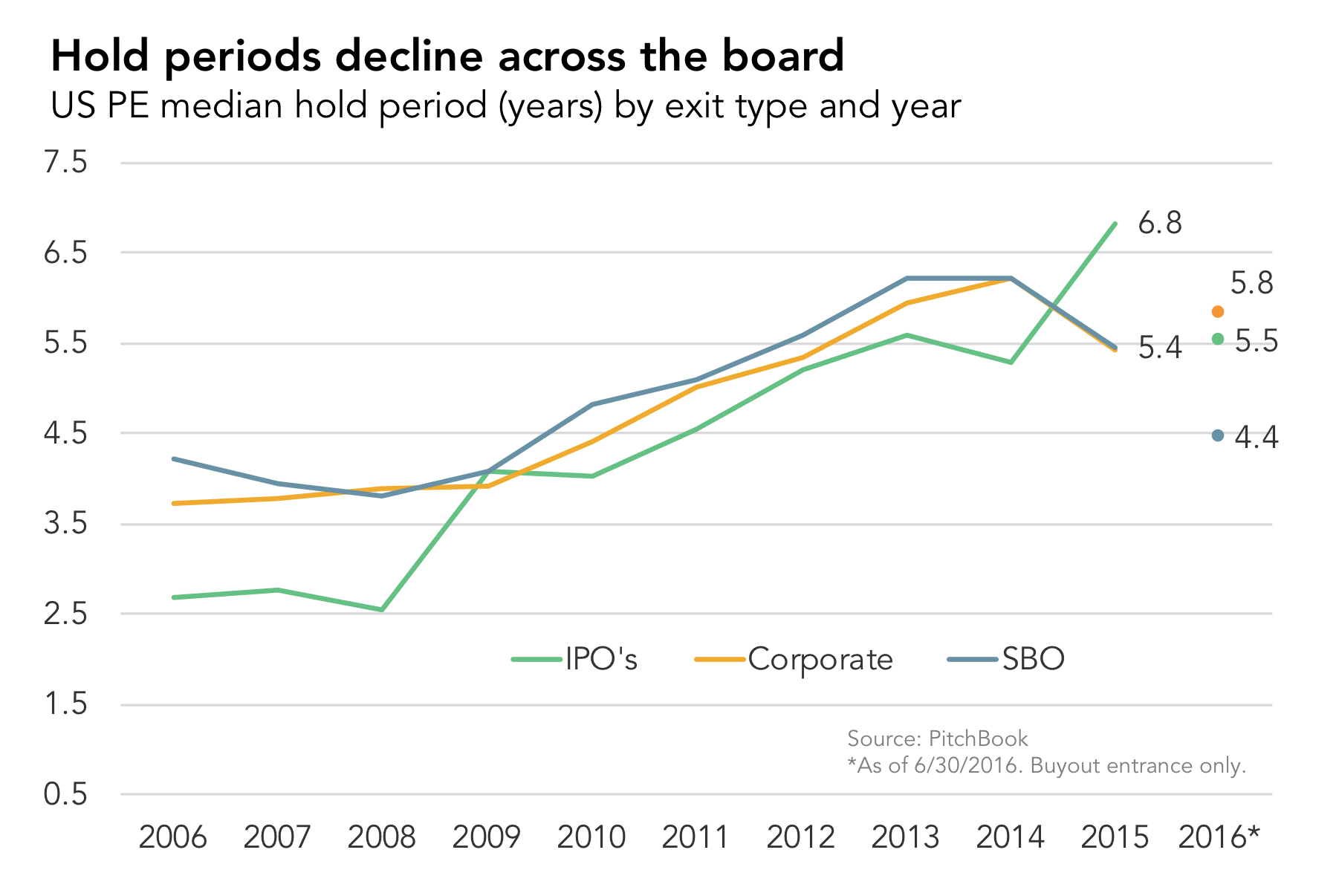 Interestingly, the exit route that saw the steepest decline was SBO, which has several implications, as this number isn’t skewed at all given the considerable number of SBOs that have occurred thus far in the year. First, PE firms are increasingly sourcing among the portfolios of fellow US PE firms for targets, as there is a distinct lack of original, quality companies for sale. Second, buyers are often rationalizing such purchases through their perceived ability to achieve further operational improvements, typically by already possessing enough resources and specialist operating partners to devote to companies in a particular sector or mature investment and management theses within a given niche. Finally, GPs that are selling in these sponsor-to-sponsor transactions are obviously happy to unload companies and achieve liquidity, while those on the buy side are clearly eager to put dry powder to work—whether or not their LPs are excited about the prospect of such recycling among the PE industry. It’s illustrative of the twin, often-competing pressures GPS are currently facing: the need to put capital to work and the lack of original targets. Both are symptomatic of how the buyout cycle is slowly winding down.
View the corresponding report here.





Latest news

Rate hike expectations ease as term SOFR curve flattens
The CME six-month Term SOFR rate reached a recent high of 3.979% on July 28 before retreating to 3.837% as…
3Q26: New loan assets rise to 44% of total lending, a 3-year high
New loan assets as a proportion of total US loan volume make up 44% of the 3Q26 pipeline to date,…

North American GPs dominant as fundraising accelerates
Our PEI Private Credit 200 ranking also shows capital raising increasing overall – and accelerating especially fast for the largest…