



Download PitchBook’s Report click here.
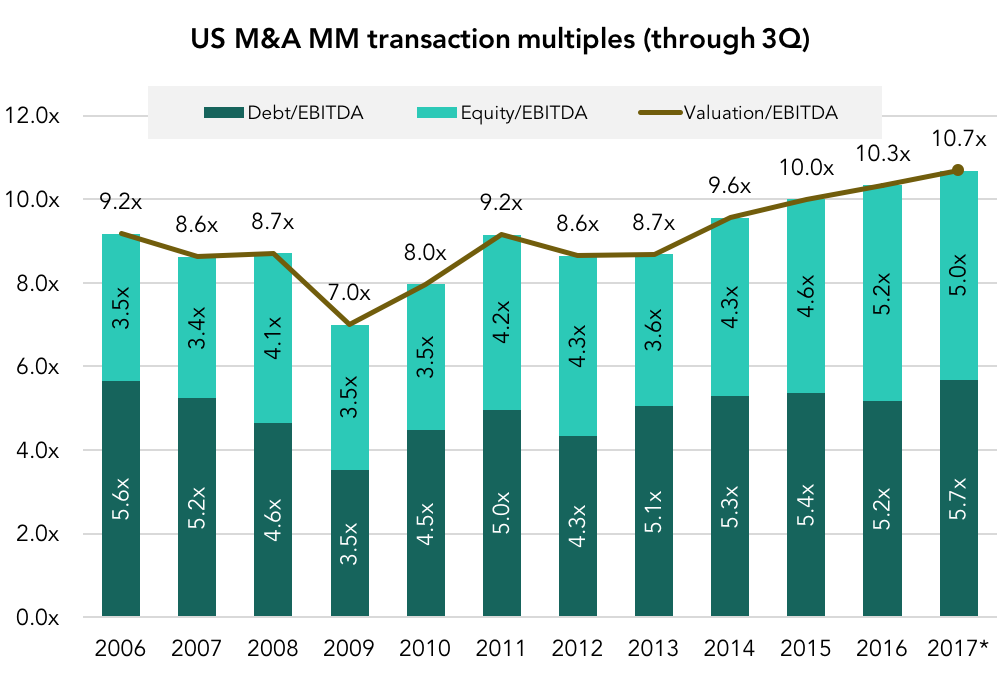
Middle market activity has never been as strong as it is now. What used to be a space to find bargains has turned into just another frenzied market, one among many. The median valuation-to-EBITDA multiple for all middle-market M&A transactions is up yet again this year, to 10.7x. That number includes both strategic and financial buyers, though the underlying dynamics of the market have shifted of late. Secondary buyouts have jumped in number while strategic activity has waned; it’s much easier for fellow PE firms to stomach the risk assumptions embedded in those investments; strategics are, understandably, having a tougher time convincing their boards to go after those same assets. Buyers that are comfortable with prior PE deal terms—and all the clauses and protections and break fees that come with them—are finding themselves, predictably, in pole position in today’s market.
Do multiples plateau from here? Conventional wisdom hints they will, but then again we remember the same thing being said three or four years ago. One reality of a frothy market, especially one that has been frothy for several years, is that investments still need to produce good returns, regardless of where the market is when investments are made and exited. Deals made in 2014, for example, should be sold for a higher multiple today—10.7x today is a turn higher than the 9.6x median from three years ago. But what happens in 2020 and beyond? Are today’s buyers penciling in more incremental increases in purchase price multiples, year after year? The flies on the wall must be privy to some interesting—dare we say frothy?—debates right now. Then again, weren’t similar debates being had back in 2014? 9.6x was a record-high median at the time.
Contact: Alex Lykken
alex.lykken@pitchbook.com





Latest news

Rate hike expectations ease as term SOFR curve flattens
The CME six-month Term SOFR rate reached a recent high of 3.979% on July 28 before retreating to 3.837% as…
3Q26: New loan assets rise to 44% of total lending, a 3-year high
New loan assets as a proportion of total US loan volume make up 44% of the 3Q26 pipeline to date,…

North American GPs dominant as fundraising accelerates
Our PEI Private Credit 200 ranking also shows capital raising increasing overall – and accelerating especially fast for the largest…