



Debt Usage in US M&A Remains Historically Low
Even as multiples remain stubbornly high across multiple sectors, debt usage remains low. This is primarily the result of a confluence of factors, including stricter regulations, cash-rich buyers and a general trend toward buying and building as a strategy on the part of private equity investors. In that last case, PE firms aren’t relying as much on financial engineering as they used to, looking instead to deploying more equity in deals to avoid overburdening portfolio companies with barely serviceable debt
loads. Of course, that necessitates shrewd operational enhancements, but that’s always been an integral part of PE ownership—the most popular methods simply vary over time.
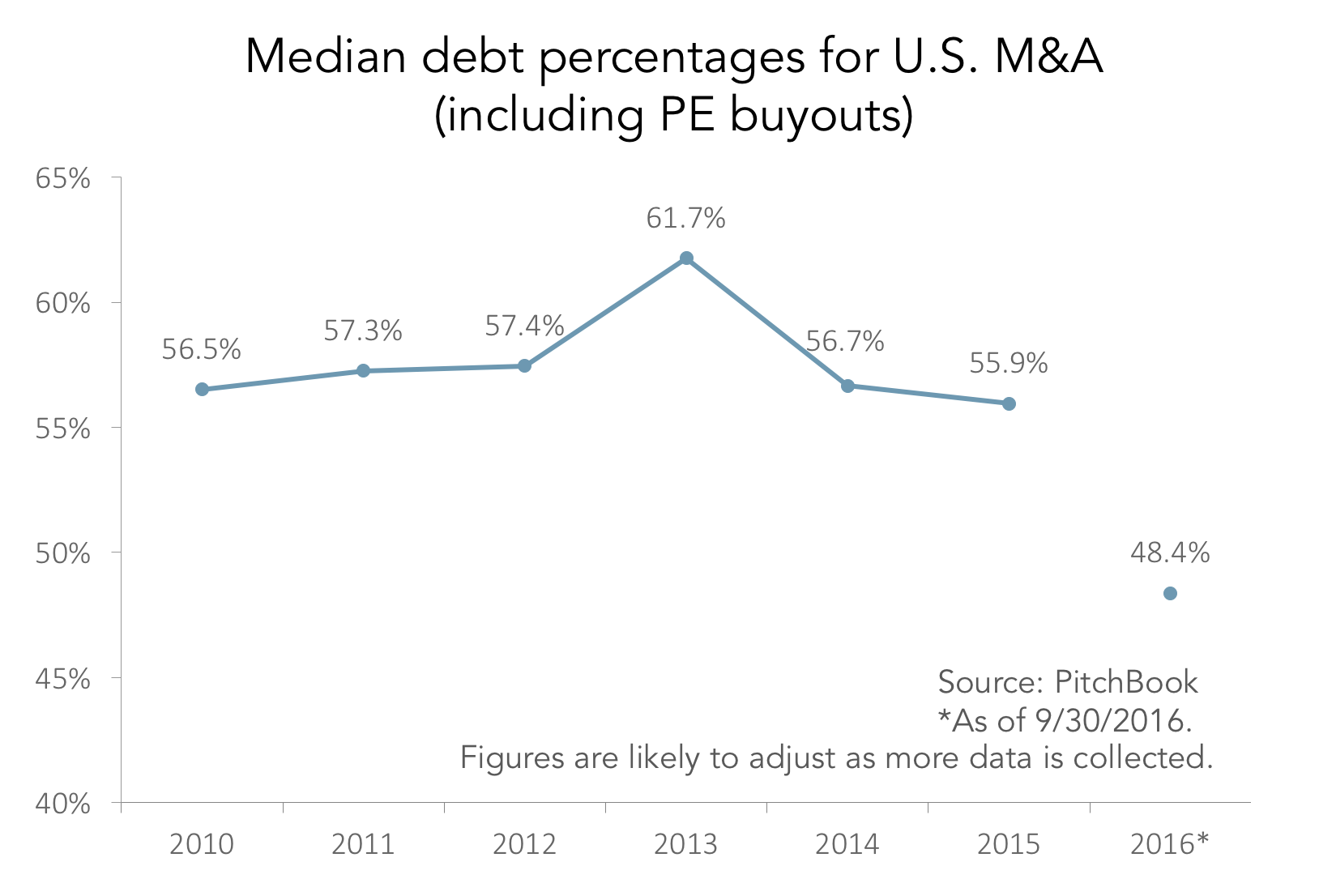
It must be noted that the relatively sharp decline between the median debt usage in 2015 and the first three quarters of 2016 is likely a result of prolonged uncertainty and sample sizes geared toward the lower middle market, as opposed to any significant shift in relevant factors. In fact, that uncertainty is worth emphasizing once more, because the reality of the current dealmaking landscape is that for every variable that could inspire some confidence, there is another that engenders some measure of uncertainty. Consumer confidence may be rising, but for businesses with significant exposure abroad, a stronger dollar may weigh on exports. In certain sectors, such as healthcare, the slowly grinding shift toward fee-for-value business models even as key regulations ramp up is still encouraging plenty of consolidation; consequently, fears around how legacy healthcare models will adapt to such sweeping changes still exist, as exemplified by health insurers grappling with costs that are higher than expected. And, last but not least, multiples remain relatively high, but there are continued disconnects between the expectations of sellers and buyers in a marketplace where the spread in company quality remains wide. In short, there remain plenty of important factors for buyers to consider, which is doubtless feeding back into increased usage of equity even in the face of relatively higher multiples, and a decline in the incidence of heavier debt loads. Plus, again, many companies still hold plenty of cash on their balance sheets, while their stock can often be priced fairly high, leading to plenty of supply when it comes to doling out more equity in an attempt to grow inorganically.
☞ Read PitchBook’s 3Q 2016 Breakdown Report here.
Contact: Garrett Black
garrett.black@pitchbook.com





Latest news

Rate hike expectations ease as term SOFR curve flattens
The CME six-month Term SOFR rate reached a recent high of 3.979% on July 28 before retreating to 3.837% as…
3Q26: New loan assets rise to 44% of total lending, a 3-year high
New loan assets as a proportion of total US loan volume make up 44% of the 3Q26 pipeline to date,…

North American GPs dominant as fundraising accelerates
Our PEI Private Credit 200 ranking also shows capital raising increasing overall – and accelerating especially fast for the largest…