The growing gap between private credit’s haves and have-nots


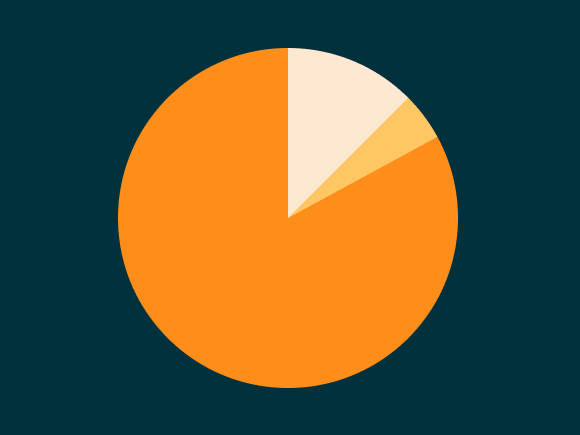
The top 10 firms have made up half of the capital collected over the past five years.
The largest alternative lenders keep raising more money, according to PDI data.
Examining the data collected for the PDI 50 – our ranking of the largest fundraisers over the last five years – the top 10 credit managers keep taking up a larger proportion of the aggregate capital raised among all 50 managers.
The top 10 debt shops collected 50.5 percent of the total $703.85 billion raised for the top 50 fundraisers. That’s up from 47.6 percent last year.
The proportion of capital collected by the top 10 in 2015 and 2016 stood at 54.48 percent and 51.42 percent, respectively. While those are both obviously larger than the same figure for 2018, the shrinking trend has been reversed this year.
There were many new entrants coming into the asset class in previous years – a phenomenon that seems to have slowed as we get later into the credit cycle and limited partners have started to ask whether the opportunity window for private credit has closed.
Indeed, panelists at the PDI Capital Structure Forum in London have said it is increasingly likely for first-time direct lenders to have trouble establishing a foothold for themselves in the asset class.
The top 10 largest funds both this year and last year have seen familiar faces: Ares Management closing large junior debt and European funds and GSO Capital Partners closing a large distressed debt vehicle, which is also on the precipice of launching a business development company likely to be a sizeable vehicle.
The big getting bigger is likely to accelerate once a cycle comes. Those firms that have a sizeable capital base are more likely to keep deploying capital when fundraising may otherwise dry up.





Latest news

Multiples on PE buyouts
This quarter marks our integration of SPI by StepStone as the primary source for US buyout valuation metrics for the PE Breakdown.
US Leveraged Loan Issuance Slows to $76.5b in July
The US leveraged loan market has continued to slow from the May level of $104.7b, with approximately $76.5b priced in…