



Click here to download report.
This report examines private credit defaulters by EBITDA size, compares default rates across the two component Model-based Credit Opinion (MCO) and Privately Monitored Ratings (PMR) portfolios, and details default reasons.
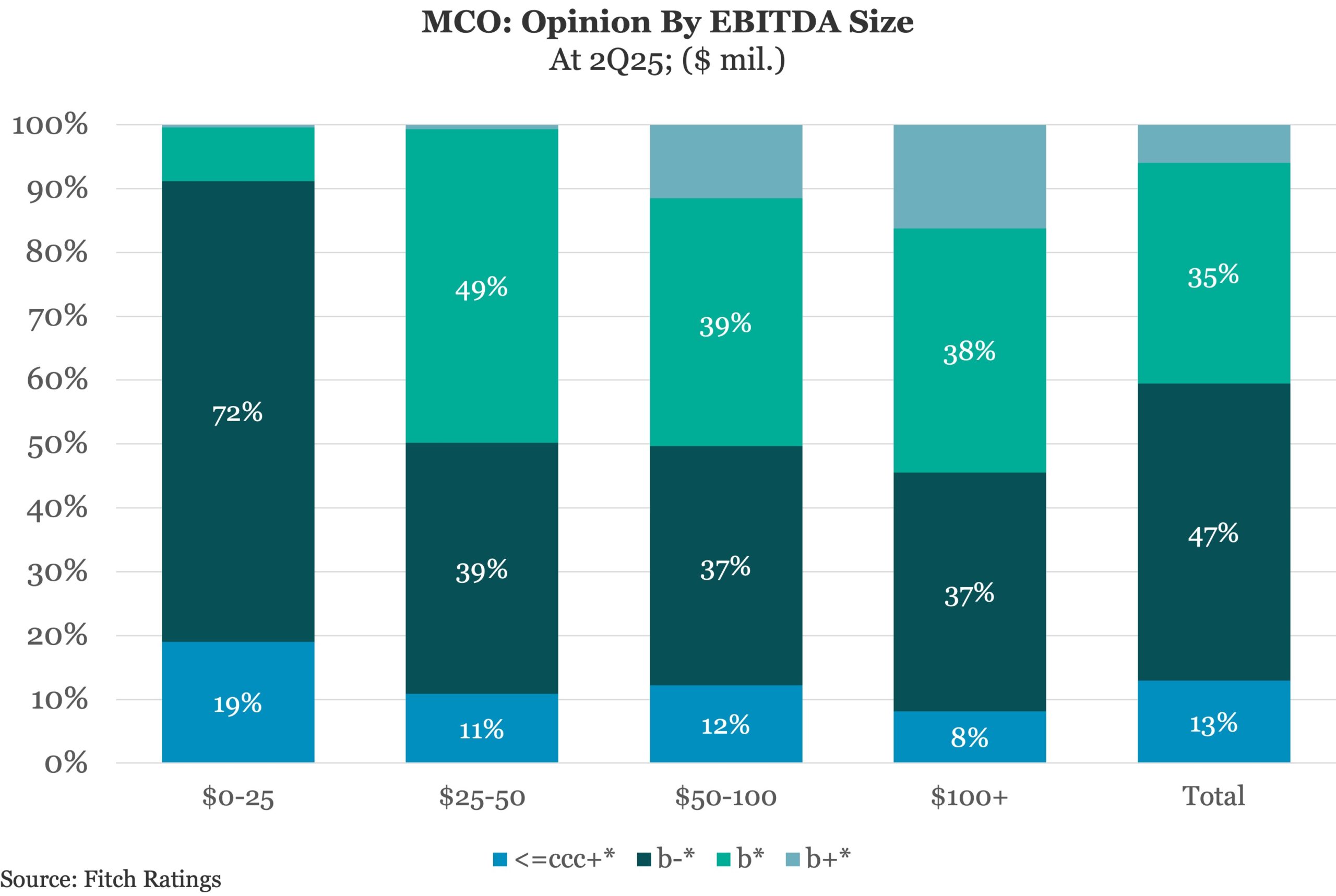
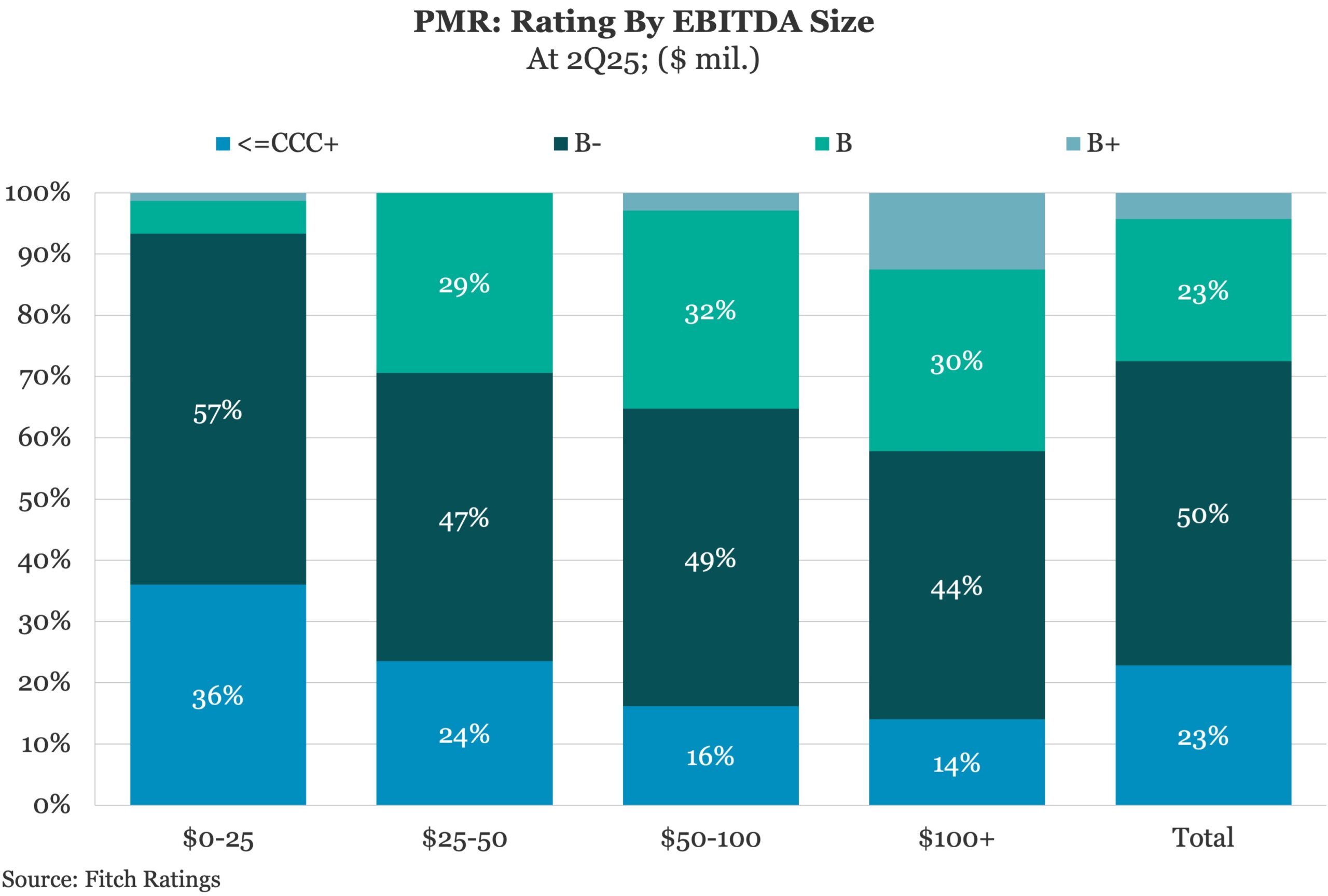
The MCO portfolio consistently demonstrates lower default rates than the PMR component in almost every EBITDA category. This outperformance reflects higher rating quality, the absence of serial defaulters due to CLO managers’ substitution rights, and structural factors. The default rate gap is widest in the $0 to $25 million EBITDA segment, where the MCO portfolio’s 6.1% default rate significantly outperforms the PMR’s 17.2% rate.
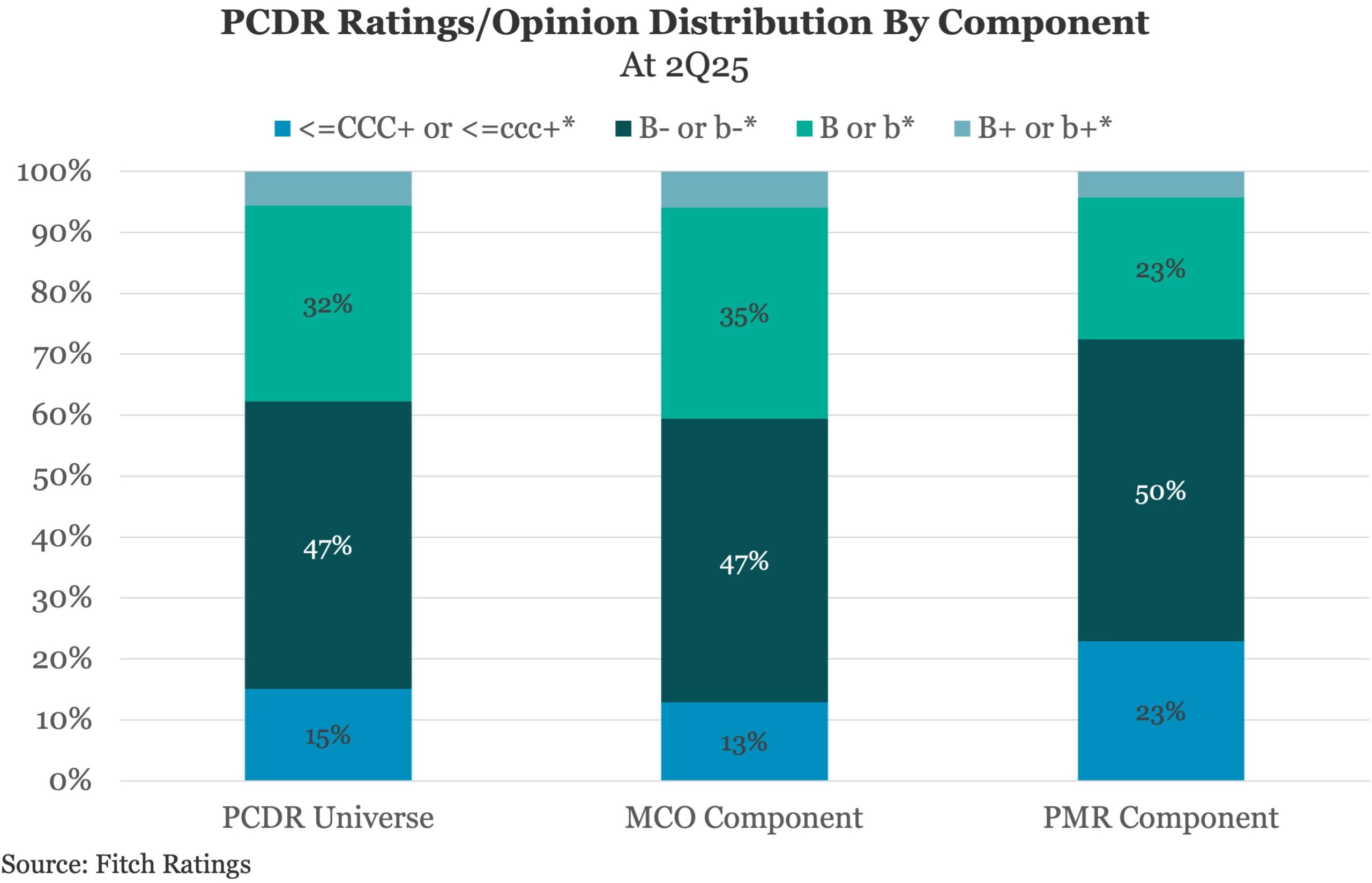
The MCO portfolio has significantly fewer high-risk credits, with only 13% rated ‘CCC+’ or lower versus PMR’s 23% exposure—a rating quality gap that aligns with lower default rates. This credit quality difference is most evident in smaller companies, where default rates are highest. In the $0 to $25 million EBTIDA segment, only 19% of issuers in the MCO portfolio are rated ’CCC+’ or lower, compared with 36% in the PMR portfolio. While most pronounced in smallest EBITDA category, this ‘CCC’ rating gap between MCO and PMR portfolios appears across all EBITDA size categories.





Latest news

Rate hike expectations ease as term SOFR curve flattens
The CME six-month Term SOFR rate reached a recent high of 3.979% on July 28 before retreating to 3.837% as…
3Q26: New loan assets rise to 44% of total lending, a 3-year high
New loan assets as a proportion of total US loan volume make up 44% of the 3Q26 pipeline to date,…

North American GPs dominant as fundraising accelerates
Our PEI Private Credit 200 ranking also shows capital raising increasing overall – and accelerating especially fast for the largest…