


Lender Survey: Are the structural characteristics of loans changing for good?

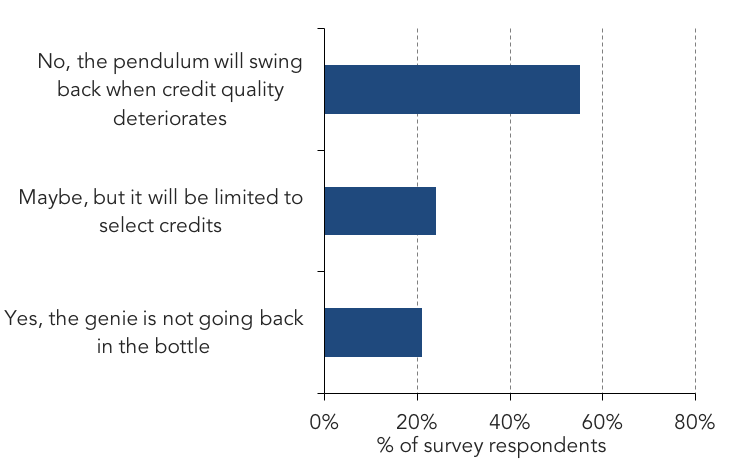
Just over half of the audience gathered during Thomson Reuters LPC’s 23rd Annual Loan & CLO Conference said that structures have not changed for good but rather the pendulum will swing back when credit quality deteriorates. However, just over one fifth disagreed, reporting that the genie is not going back in the bottle and once heavily negotiated docs will not be easy to change. Meanwhile, 24% said that structures will continue to be favorable for issuers but select high quality, lower risk credits. With increased optionality in credit agreements, sponsors can pursue a number of avenues and have increased flexibility in case of a credit going through some bumps. For new deals, investors generally have a wish list for rolling back structural deterioration with, not surprising, bringing back covenants with clean historical EBITDA definition meaning capped add-backs and no inclusion of projected results or cost savings at the top of the list. Although a lower spread impacts the immediate economics of a deal, erosion in structures has the potential to affect loss and recovery and conference attendees expect that recoveries may be lower in the next downturn. Looking ahead, some arrangers comment that when there is more supply for investors or if there is a bumpy period of broader market volatility, investors will have more room to push back on recent loosening.
Contact: Ioana Barza
ioana.barza@thomsonreuters.com





Latest news

Rate hike expectations ease as term SOFR curve flattens
The CME six-month Term SOFR rate reached a recent high of 3.979% on July 28 before retreating to 3.837% as…

3Q26: New loan assets rise to 44% of total lending, a 3-year high
New loan assets as a proportion of total US loan volume make up 44% of the 3Q26 pipeline to date,…

North American GPs dominant as fundraising accelerates
Our PEI Private Credit 200 ranking also shows capital raising increasing overall – and accelerating especially fast for the largest…