


Leveraged loan & high yield bond default rate creeps up from recent lows

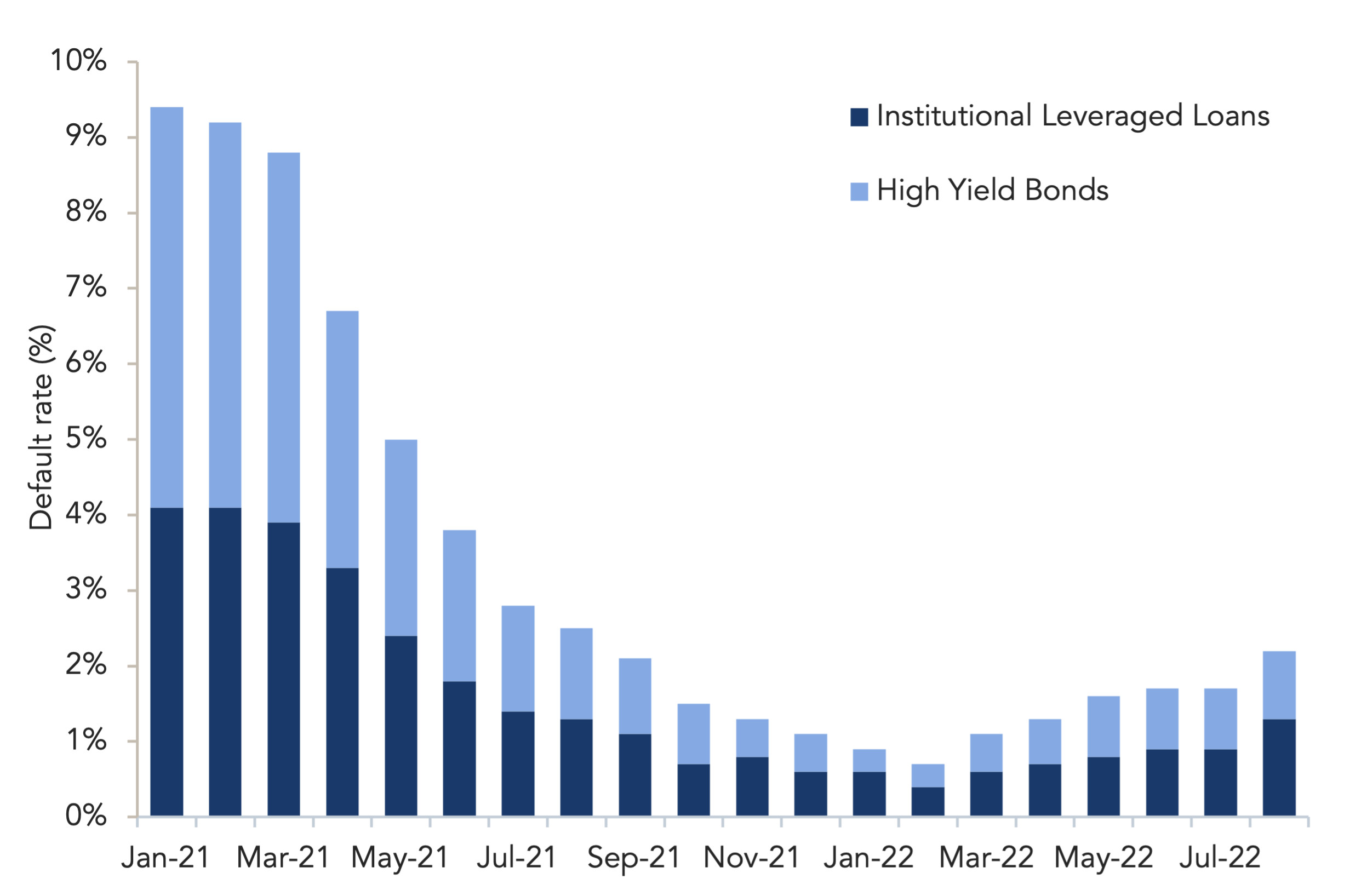
Source: Fitch Ratings, Debtwire Par
One area to watch as the Federal Reserve maneuvers a soft landing from inflation will be the credit health of leveraged borrowers in the face of prolonged economic pain caused by tightening monetary policy. August saw an uptick in loan defaults, with a total of USD 6bn in default volume across six borrowers – the highest monthly total since October 2020. Endo International’s USD 1.975bn Chapter 11 filing was the largest of the month, followed by Lumileds’ USD 1.67bn filing. This pushed the trailing twelve-month average default rate up to 1.3% in August from 0.9% in July. Notably, year-to-date default volume through August, at USD 17.6bn is more than triple the total this time last year.
So far in September, Cineworld has logged the largest leveraged loan default since iHeartCommunications filed in 2018. The cinema operator filed for Chapter 11 protection in Texas earlier this month with commitments for a USD 1.785bn debtor-in-possession financing, pushing the TTM loan default rate up further to 1.5%.
The high yield bond default rate also moved up in August, to 0.9% from 0.8% in July, following Endo International’s Chapter 11 filing and The Geo Group’s distressed exchange. Fitch projects the rate to continue moving upward, likely ending the year around 1% and potentially exceeding 2% by 2024, as likely restructuring candidates such as Bed Bath & Beyond and Avaya work through their options.
While the two default rates have slowly been creeping upward, they remain below the historical non-recessionary average default rates of 1.7% in the loan market and 2.2% in the bond market, indicating that at least for now, credit health remains under control.
(Past performance is no guarantee of future results.)





Latest news

Rate hike expectations ease as term SOFR curve flattens
The CME six-month Term SOFR rate reached a recent high of 3.979% on July 28 before retreating to 3.837% as…
3Q26: New loan assets rise to 44% of total lending, a 3-year high
New loan assets as a proportion of total US loan volume make up 44% of the 3Q26 pipeline to date,…

North American GPs dominant as fundraising accelerates
Our PEI Private Credit 200 ranking also shows capital raising increasing overall – and accelerating especially fast for the largest…