


Deals and refinancing offset market shocks as LevFin issuance tops 2025 levels

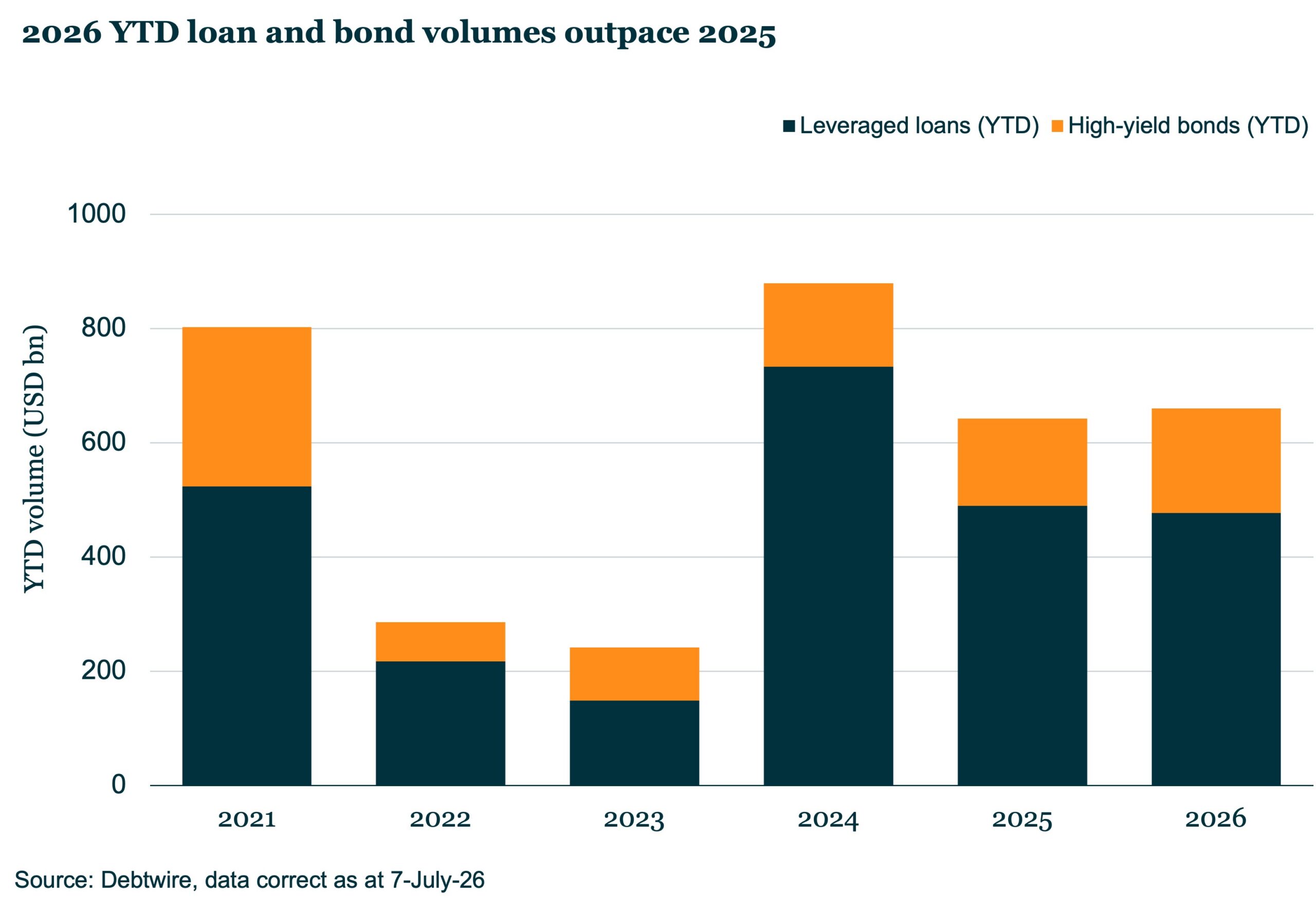
Leveraged finance issuance has remained resilient despite technology-sector volatility and geopolitical turmoil. Combined leveraged loan and high-yield bond volume reached USD 660bn through 7 July, edging ahead of last year’s pace as refinancings and data center financing supported deal flow.
The combined volume represents an increase of nearly 3% from the USD 642bn raised during the same period in 2025. Leveraged loan issuance remained broadly flat at USD 477bn, compared with USD 489bn in the same period last year, according to Debtwire data.
“That’s being driven by essentially an overall environment where demand is creating supply,” one banker said.
“Demand is creating supply for repricings, dividend recaps, refinancings, all types of opportunistic deals. The event driven part of the market is very active. … Opportunistic issuance is full on right now.”
According to Creditflux data, while new CLO issuance softened in 2Q26, refinancing and reset volumes rose 54% to USD 82bn from USD 53bn in 1Q26, adding to demand for loan issuance.
Meanwhile, high-yield bond volume rose 20% year-over-year to USD 183.3bn from USD 152.7bn during the same period last year, Debtwire data shows.
Market shocks that weighed on primary loan issuance
Both 2025 and 2026 were marked by distinct shocks that affected primary market issuance. In April 2025, the US announcement of “Liberation Day” tariffs on international trading partners weighed heavily on leveraged loan activity. Volumes fell from a January high of USD 197.7bn to just USD 10.4bn in April.
Then, in late January 2026, the so-called “SaaSpocalypse” triggered a sell-off in software loans in the secondary market, leading to a decrease in opportunistic deals as loan prices fell and dampening of primary issuance as underwriters reevaluated risk associated with the sector. Sentiment was further pressured by the conflict in the Middle East in late February, contributing to a decline in leveraged loan issuance from USD 163.3bn in January to USD 38.2bn in March. Since then, loan activity recovered, supported primarily by refinancing transactions in May and June.
Looking at the type of activity, new-money loan issuance represented a slightly larger share of the market last year, reaching USD 129bn, or 26% of total issuance of USD 489.5bn through early July 2025.
In 2026, refinancing volumes remained broadly flat at around USD 360bn, comparable with 2025 levels. However, new-money issuance declined more than 10% YoY to USD 115.6bn, representing 24% of total issuance this year.
For access to our comprehensive news, analysis and data on the global loan and bond markets, please subscribe to Debtwire.





Latest news

Rate hike expectations ease as term SOFR curve flattens
The CME six-month Term SOFR rate reached a recent high of 3.979% on July 28 before retreating to 3.837% as…
3Q26: New loan assets rise to 44% of total lending, a 3-year high
New loan assets as a proportion of total US loan volume make up 44% of the 3Q26 pipeline to date,…

North American GPs dominant as fundraising accelerates
Our PEI Private Credit 200 ranking also shows capital raising increasing overall – and accelerating especially fast for the largest…