



Given the high-profile and disturbing nature of tensions between certain countries, geopolitics weighs heavily on investors’ minds today.
While the Ukraine-Russia war continues to rage, private markets investors are just as worried – in fact slightly more so – about simmering tensions between the US and China.
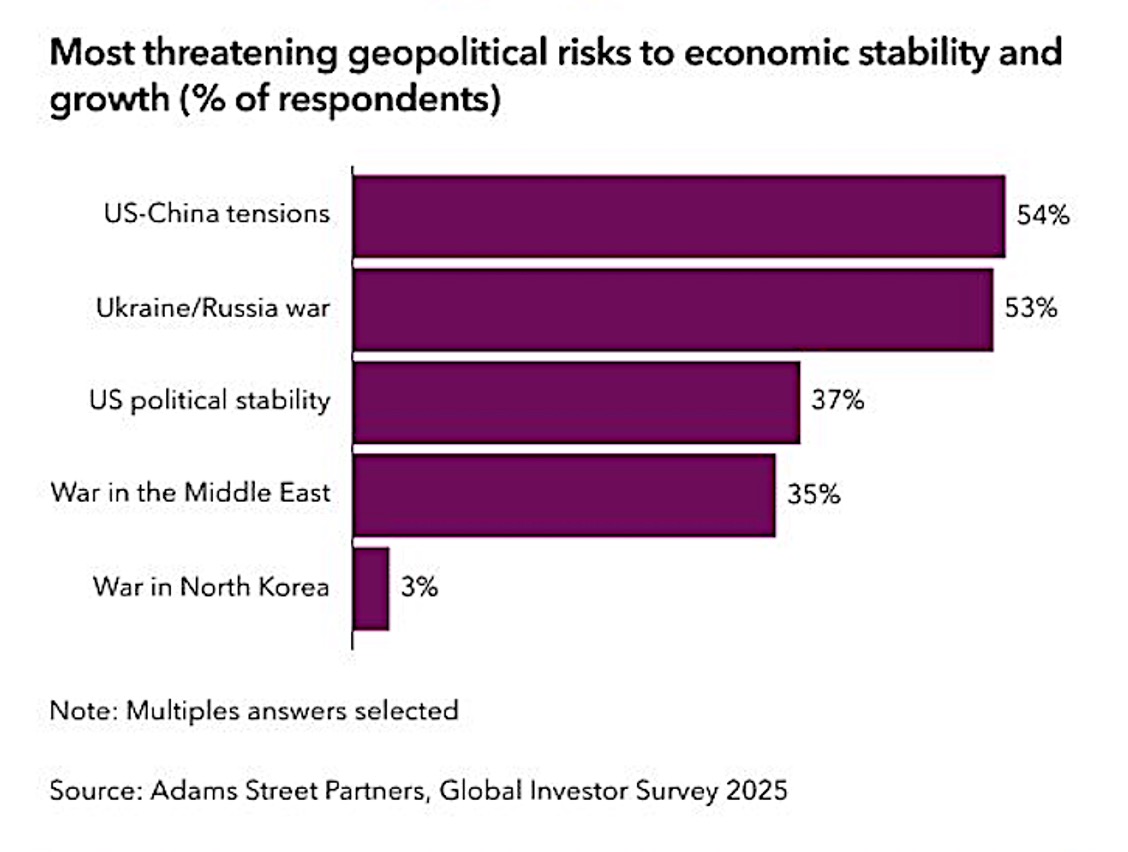
Adams Street Partners’ Global Investor Survey 2025 recorded 54 percent of investors citing US-China tensions as the biggest geopolitical risk to economic stability and growth, followed closely behind by the Ukraine/Russia war (53 percent).
Political stability in the US was a prime concern for 37 percent of those polled, indicating concerns over the political climate in the US – even if these worries don’t loom quite as large in investors’ minds as the reality (or assumed possibility) of global conflicts.
But does all this matter? Are such considerations likely to have a material impact on allocation decisions, or are investors simply sharing their concerns without any direct reference to the day job? In fact, it appears to matter quite a lot.
As part of Private Debt Investor’s LP Perspectives survey for 2025, we asked respondents which three factors would have the greatest impact on their private market portfolios over the next three months. By far the most common selection was geopolitical uncertainty, chosen by 62 percent of investors.
This was way ahead of “extreme market valuations” and recession in core markets”, each of which were selected by 39 percent of respondents, with other popular choices including regulatory changes, high inflation and interest rate hikes.
In the first quarter of this year, there was hope of a private credit fundraising revival as a record-breaking three months was recorded by our data. Whether this momentum can carry on through the rest of the year has a lot to do with market conditions – pricing, competition, deal flow, documentation and the like. But no-one should underestimate the global political backdrop and the dampening effect it can have on economies – and on investor appetite.







Business of Private Credit: Coming Home
Much attention has been paid to the suitability of Matt Damon in the lead role as the wily Odysseus in this summer’s Christopher Nolan blockbuster.