



Private debt has new guidelines as it seeks credibility in its response to climate change.
The Institutional Investors Group on Climate Change – formed in 2001 as a forum for collaboration between pension funds and asset managers on climate change issues – has published the first net-zero guidelines for private debt managers.
The guidance establishes a framework the asset class can use to set up and deliver on net-zero commitments – including advice on engagement and reporting for general partners, limited partners and portfolio companies.
Based on existing guidelines for the private equity industry and other asset classes, the private debt version includes a 12-month ‘grace period’ which, according to the IIGCC, is due to “the challenges that private debt GPs face with collecting data and information from portfolio companies around net-zero targets”.
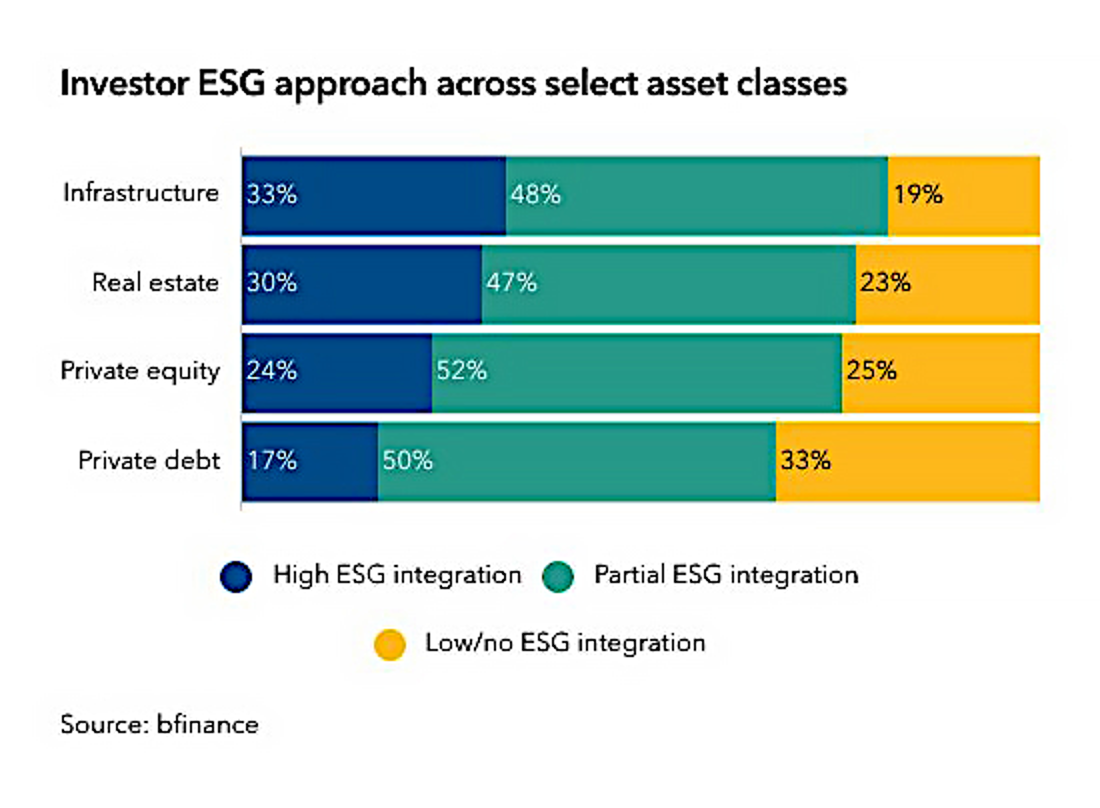
As the chart above shows, only 17 percent of investors in a survey believed private debt managers had high integration of ESG into their processes. There is, therefore, a lot of work to be done before private debt can claim credibility in this area.
The grace period hands private debt managers a year after a deal’s closing to: gather information for reporting against the IIGCC’s Net Zero Investing Framework; engage with portfolio companies to improve transparency; and potentially finalise deal terms such as ESG margin ratchets.
The guidelines, led by the IIGCC, included input from Ceres – the non-profit advocacy for a sustainable economy – as well as numerous private debt firms.
A statement from the IIGCC said the guidance was aimed at those involved in direct lending, venture/growth debt, opportunistic credit, structured credit, fund financing and private placements.
“This guidance, developed with significant input from the private debt community, offers a helpful blueprint for investors to decarbonize their private debt portfolios,” said Peter Ellsworth, senior director at Ceres. “Private debt is a quickly growing asset class with unique challenges. This guidance balances ambition with practicality, providing bespoke net-zero target types and tailored engagement strategies.”



Latest news

PE middle-market pooled IRR and TVPI by TEV size bucket
The lower end of the middle market has generated better returns on average and does not come with significantly more left-tail risk


Investors exit retail loan funds in July
Investors in leveraged loans have been pulling money from retail funds in recent weeks, with redemptions outpacing investments by $253.3b…