



This week, we reflect on a few of the talking points from PDI’s recent Europe Summit 2024 in London.
Are favoured sectors still good value?
One panellist said the gradual retreat of covid brought with it the end of the honeymoon period for technology and life sciences, two sectors that had previously exploded in popularity among private debt lenders. Beneficiaries of greatly increased government funding, the taps were turned off and tougher trading and operating conditions have been experienced since. Companies have had to adjust to these straitened circumstances though a period of rising interest rates. It would be wrong to sound too pessimistic a note, however. The view expressed was that “the going has got harder but there remains a strong rationale for taking on debt and provision of debt is still relatively abundant. There are options around for good borrowers”.
Bigger deals lead to concentration risk
The club deal has long been a feature of private debt, but whereas a decade ago such deals would rarely incorporate more than a few lenders, these days anywhere between 10 and 15 may be scrambling for a seat at the table – either muscling in alongside the broadly syndicated market or pure “all private debt” affairs. The main concern for investors is around the potential for overlapping exposures and the possible threat to portfolio diversification. Investors are asking whether, at the larger end, there is much of a distinction between bank loans and private debt loans. They’re also wondering whether transaction and management fees should come under greater scrutiny in what is arguably a more commoditised space.
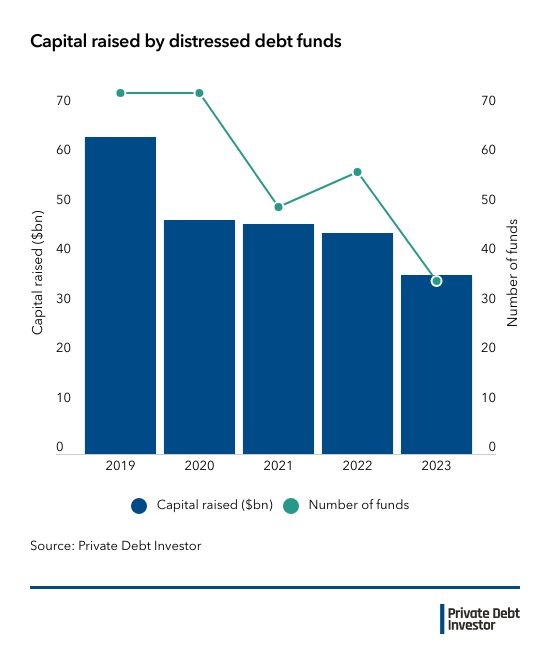
Distressed, a thing of the past – or not?
“There’s a massive amount of Swiss cheese-size holes in credit agreements from the sponsored world and we’re seeing creditor-on-creditor violence. It’s hard to hide from the word distressed in those situations,” said one panellist. This runs contrary to what has become a widely accepted narrative: that the days of “pure distress” are behind us. Perhaps all we needed were a sharp hike in interest rates, the threat of recession and global geopolitical instability for the “d” word to come back into fashion. There again, that “opportunistic credit” label is still popular and it appears to be something investors will get behind whether it’s genuinely a strategy for changed times or just clever marketing.




Latest news

PE middle-market pooled IRR and TVPI by TEV size bucket
The lower end of the middle market has generated better returns on average and does not come with significantly more left-tail risk


Investors exit retail loan funds in July
Investors in leveraged loans have been pulling money from retail funds in recent weeks, with redemptions outpacing investments by $253.3b…