


Markit Recap – 4/18/2016

Brazil leads as credit risk in Latam region recedes
- Brazil’s 5-yr sovereign CDS spread has tightened to its lowest level since last August
- Peru, Chile and Colombia have all seen a 35% tightening in sovereign credit spreads
- Markit iBoxx USD Emerging Markets Corporates LatAm Index has returned 7.7% this year
Credit markets reacted positively after Brazil’s congress voted in favour of impeaching President Dilma Rousseff on Sunday.
Spurred on by Brazil and stronger commodity prices, the past couple of months have also seen perceived credit risk in the wider Latam region tumble. The buoyant mood in the region was confirmed by the strong investor demand for Argentina’s comeback bond issue.
Brazil’s falling credit risk
It’s been a tough past year for Brazil, battered by weak commodity prices, slowing global trade and significant political risk. Brazil’s economy shrank 3.8% in 2015 and this year’s IMF forecasts looks just as bleak. Scandal and corruption surrounding Brazil’s state controlled oil company Petrobras and economic mismanagement over the years has dented investor confidence. Markets see the ousting of Rousseff as a path that will ultimately lead to reforms needed to get the country out of recession.
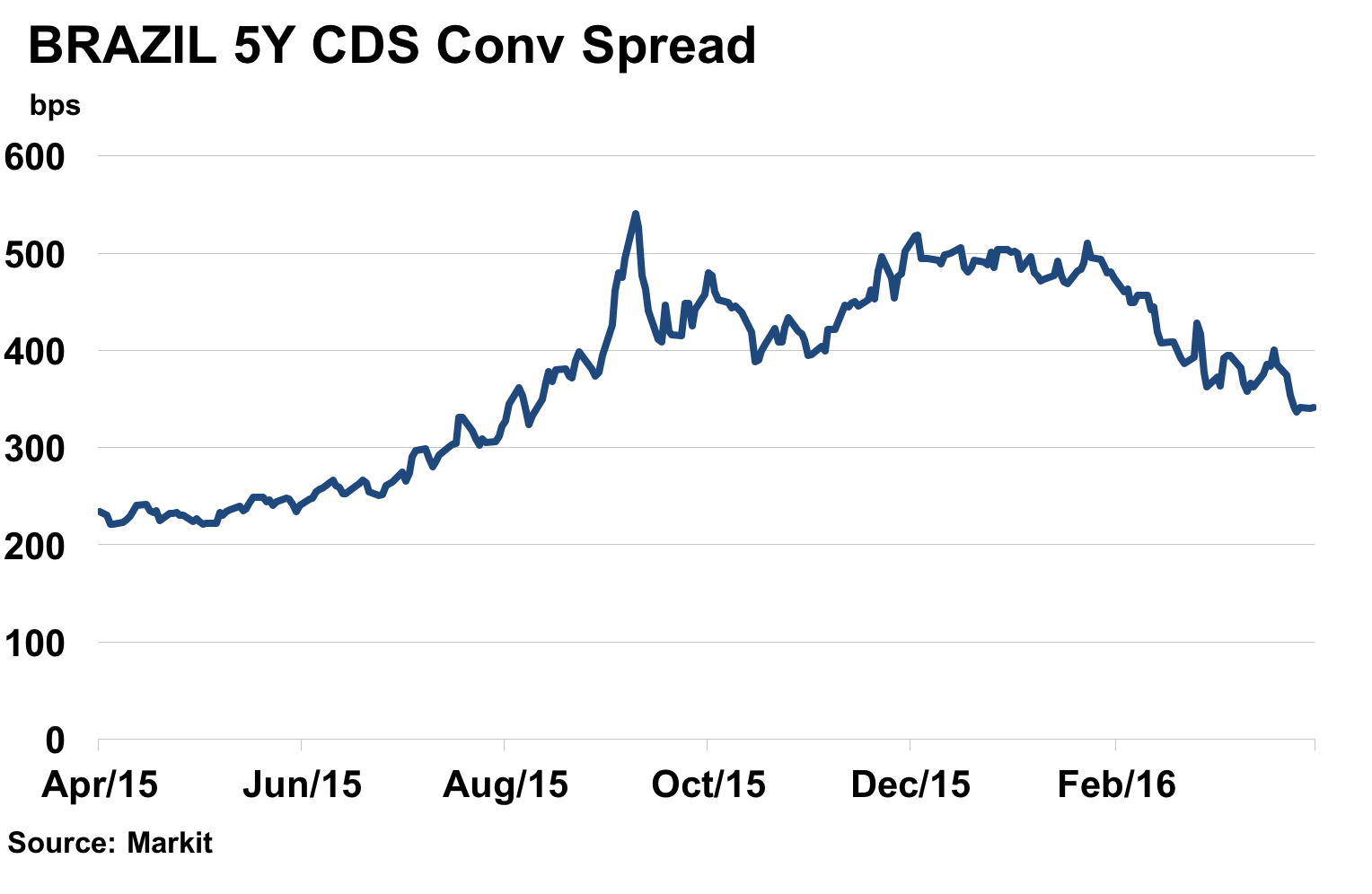
But the heightening prospect of a new government to tackle Brazil’s economic woes was enough to send Brazil’s 5-yr CDS spread to its lowest level since last August. Spreads had reached as high as 500bps in January but have since tightened 159bps to 341bps, according to Markit’s CDS pricing service.
A buoyant region
The optimism in Brazil has also spread to the wider Latam region with Peru, Chile and Colombia all seeing a 35% tightening in sovereign credit spreads since January’s highs.
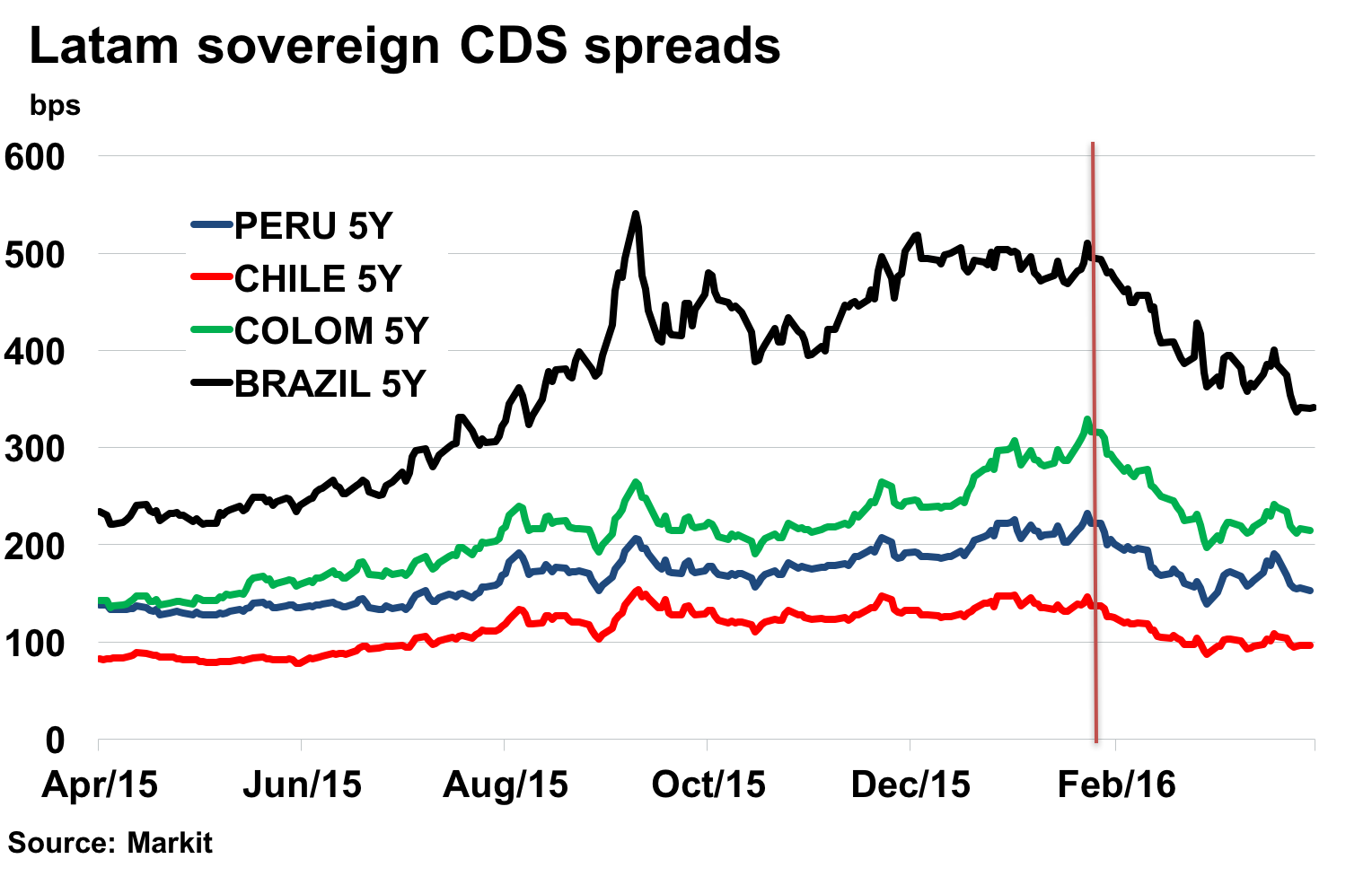
The improved sentiment has much to do with stronger commodity prices, which have gained 3.76% so far this year according to Bloomberg. Colombia (Oil, Coffee), Peru (Copper, Oil) and Chile (Copper) are all heavily reliant on commodities through export revenues. The Latam region also welcomed the return of Argentina to international bond markets after a fifteen year hiatus, to strong investor demand.

From an investor’s standpoint, bond performance in the region has been strong so far this year. US dollar denominated corporate bonds, as represented by the Markit iBoxx USD Emerging Markets Corporates LatAm Index, have returned 7.7% in 2016, with March proving particularly lucrative. This has meant yields (which move inversely to price) in the sector have dropped below 7.5% for the first time in six months.
Contact: Neil Mehta
Email: neil.mehta@markit.com





Latest news


Software, consumer-related direct lending deals fell in H1'26
The software and technology sector, the second-most-active sector in 2025 at 17% of total deal activity, slid to fifth place in the first half of 2026.

Unconquered Territory
With most of the map still unexplored, there’s room for a sequel.