


Markit Recap – 1/4/2016

Back in August 2014 I wrote a note that highlighted how the restructuring of Banco Espirito Santo (BES) exposed flaws in the 2003 ISDA CDS definitions, flaws that should be remedied by the new definitions introduced later that year.
It was a far from perfect situation but a CDS succession event followed and that was the end of the matter. Or so we thought, until an unexpected announcement by the Bank of Portugal just before the 2015 New Year. The central bank decided to “bail-in” five of the 52 bonds issued by Novo Banco – the institution holding the “good” assets after the enforced restructuring in 2014 – by transferring them back to Banco Espirito Santo, the “bad bank”.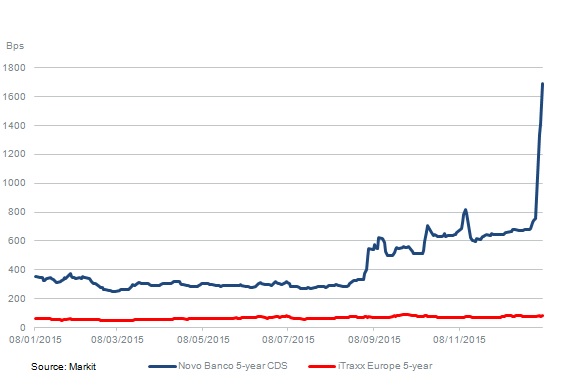
The aim is to plug a €1.4bn capital shortfall in Novo Banco exposed by the last ECB stress tests. The timing of the announcement was no doubt triggered by the EU Bank Resolution and Recovery Directive (BRRD), which came into effect on January 1 2016. It also raises questions around pari passu: even if the central bank is entitled to transfer the bonds (and may well be debated in court) why not treat all bondholders equally, as stated in the indentures? It appears that the five bonds selected have been chosen for legal, moral and political reasons – they are in Portuguese law and weren’t sold to retail investors (and perhaps not sold to domestic banks). This decision is understandable given the electorate’s recent rejection of austerity and the swearing in of a left-leaning government, but it is likely that international bondholders will be less forgiving.
What does this mean for CDS? We could see the first Governmental Intervention credit event since it was introduced in the 2014 ISDA definitions. At the time of writing the ISDA Determinations Committee was still deliberating, but the reaction in the markets – Novo Banco’s five-year senior spreads widened to 1,700ps, and the curve is now steeply inverted – suggests a high probability of a trigger. A succession event could also occur, which may result in senior CDS being transferred to Banco Espirito Santo – the original issuer before the 2014 restructuring!
In its first-half results presentation, Novo Banco used a chart showing how its CDS spreads had tightened from 2014 levels and compared favourably to its peers. After this debacle, it is unlikely they will do the same in their 2015 annual report.
Contact: Gavan Nolan
Email: Gavan.Nolan@markit.com




Latest news

US Leveraged Loan Launch Activity Moderates in July
The US leveraged loan market has recorded $14.01b of new launches through Wednesday, July 22, following $20.91b of issuance the…

US Direct Lending Spread Per Turn of Leverage Widens
Wider spreads and slightly lower leverage provided lenders with better risk-adjusted pricing across all deal sizes in the second quarter.

Concentrated Effort
Tech deals favored upper end of market, especially in 2021 when software valuations peaked. Source: KBRA DLD Research