



Exploration and production companies continue to feel the crunch from low oil prices, which began their slide in mid-2014. While oil prices have rebounded from this year’s February lows, the uplift is facing major headwinds as OPEC members and Russia recently announced they wouldn’t freeze production. Many companies have filed for bankruptcy and more are expected to default if prices remain at low levels. Many issuers are seeing a reduction in their borrowing capacity as the current borrowing base redetermination season is underway. 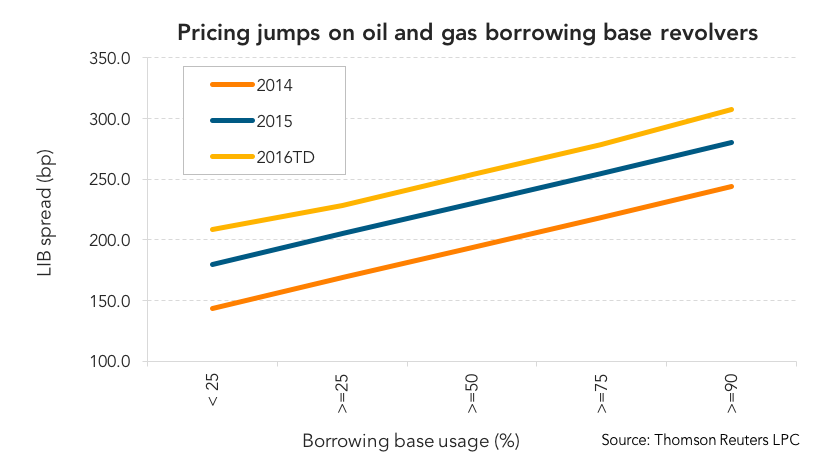 During this time, banks reevaluate how much companies can borrow based on the value of their reserves. Not only is capacity being squeezed, the pricing paid on those loans is also on the rise. Pricing on reserve-based revolvers is usually tied to a grid based on borrowing base usage. So far in 2016, spreads have increased an average of 11% for all levels of the grid relative to 2015 and a much higher 33% from 2014 levels. Not only has pricing increased for each level of the grid, but as borrowing bases are being cut, usage is most likely to fall at a higher level in the grid; meaning the issuer could be facing much higher costs.
Contact: Diana Diquez
diana.diquez@thomsonreuters.com





Latest news
Software, consumer-related direct lending deals fell in H1'26
The software and technology sector, the second-most-active sector in 2025 at 17% of total deal activity, slid to fifth place in the first half of 2026.

Unconquered Territory
With most of the map still unexplored, there’s room for a sequel.