


Markit Recap – 12/1/2014

The big story in the global economy as 2015 comes to an end is undoubtedly the sharp fall in the oil price. Brent crude is hovering around $70 a barrel, the lowest for about five years.
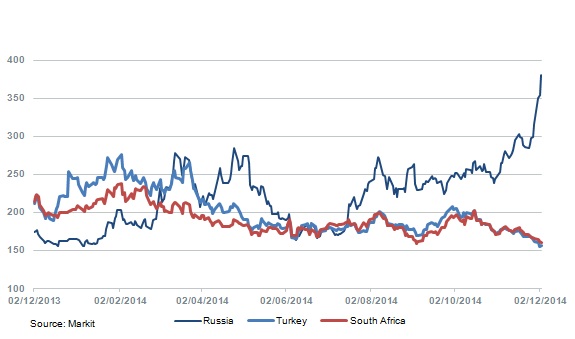
But how does the price of a commodity affect the credit markets, in particular emerging market sovereigns? Russia’s CDS spreads rose from 170bps in June to 380bps almost six months later, the widest level since April 2009. Of course, the plummeting oil price is not the only problem facing Russia. The conflict in eastern Ukraine, where Russia is the protagonist, continues despite talk of ceasefires. Sanctions are biting, and are no doubt contributing to capital flight, a precipitous fall in the ruble and sharply lower growth forecasts.
However, it is surely the significant fall in the oil price – precipitated by OPEC’s refusal to cut production – that has made the biggest contribution to Russia’s spreads widening. The country is one of the world’s largest oil exporters, and a $10 fall in the price of the commodity costs Russia approximately $25-35bn. This will clearly have a negative impact on the country’s external position, accelerate capital flight and could lead to spreads widening even further. But Russia does have considerable reserves, which gives it plenty of breathing space to survive the current spell of lower oil prices.
Contact: Gavan Nolan



Latest news

US Leveraged Loan Launch Activity Moderates in July
The US leveraged loan market has recorded $14.01b of new launches through Wednesday, July 22, following $20.91b of issuance the…

US Direct Lending Spread Per Turn of Leverage Widens
Wider spreads and slightly lower leverage provided lenders with better risk-adjusted pricing across all deal sizes in the second quarter.

Concentrated Effort
Tech deals favored upper end of market, especially in 2021 when software valuations peaked. Source: KBRA DLD Research