Private Credit Risk Not Systemic, Yet Structures, Asset Classes Evolving

Click here to learn more.
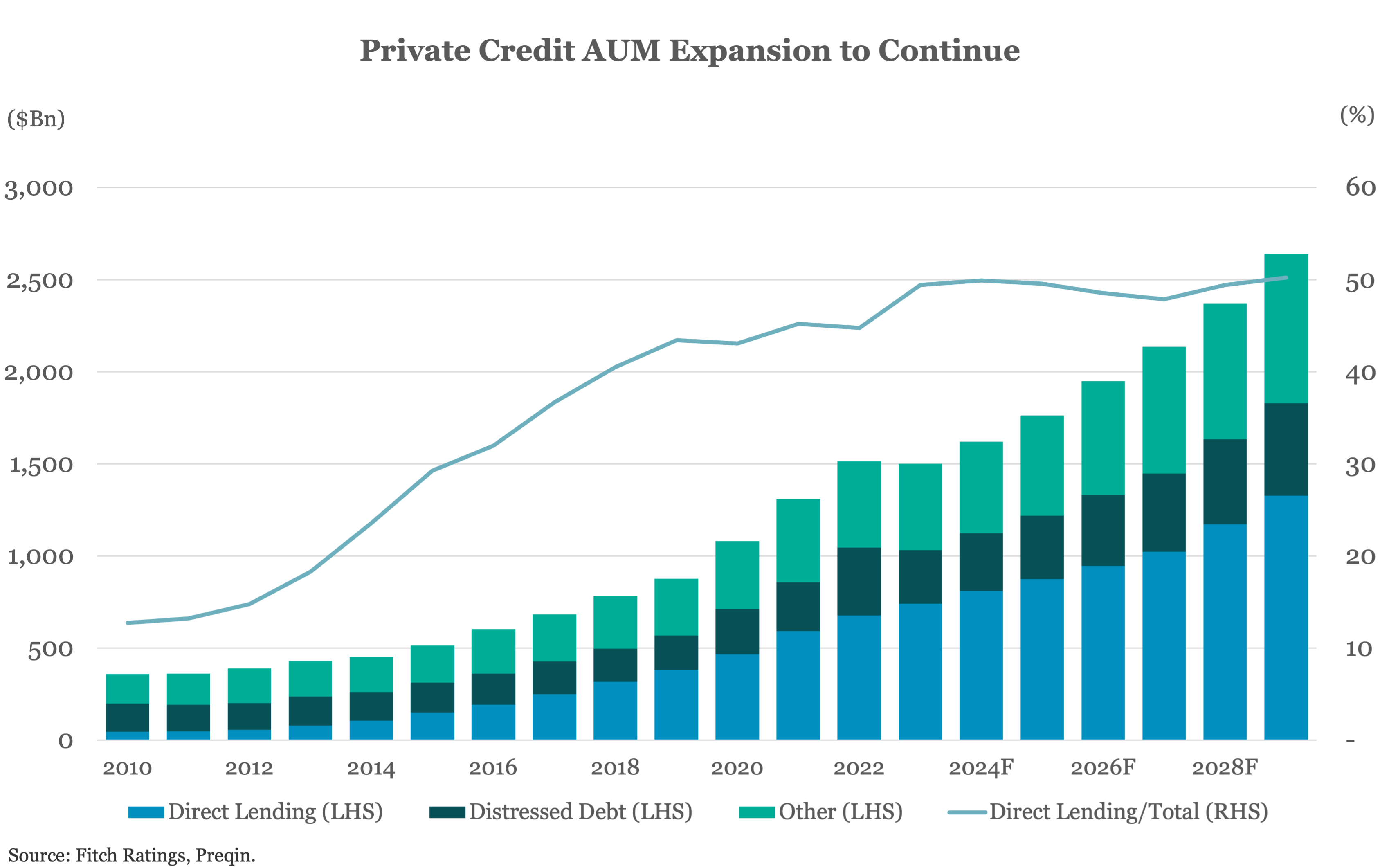
Private credit, in isolation, is not currently a systemic risk given numerous mitigants, particularly within direct lending, which continues to dominate the asset class, Fitch Ratings says in a new report. Increased transparency will aid in the assessment of risk, but evolving structures, new asset classes and growing interconnectedness require closer monitoring.
Global private credit has grown rapidly in recent years to $1.6 trillion in assets under management (AUM), according to Preqin. Direct lending accounts for half of AUM, but asset-based finance will drive growth over the next several years. Some alternative investment managers (IMs) are expanding this asset class via bank portfolio purchases and/or flow agreements, as banks focus on capital efficiency.



Latest news

US leveraged loans returns turn negative in October
The Bloomberg US Leveraged Loan Index (Ticker: LOAN) has returned -0.26% this month through October 21, reducing its year-to-date return…

M&A activity begins to tick upward
In the third quarter of 2026, acquisition-linked loan volume across North America and Europe reached about $47 billion, up from $30.6 billion in Q2 and $29.5 billion a year ago.