


Industrial strength: surging volumes and falling costs signal robust 2024 DebtDynamics North America

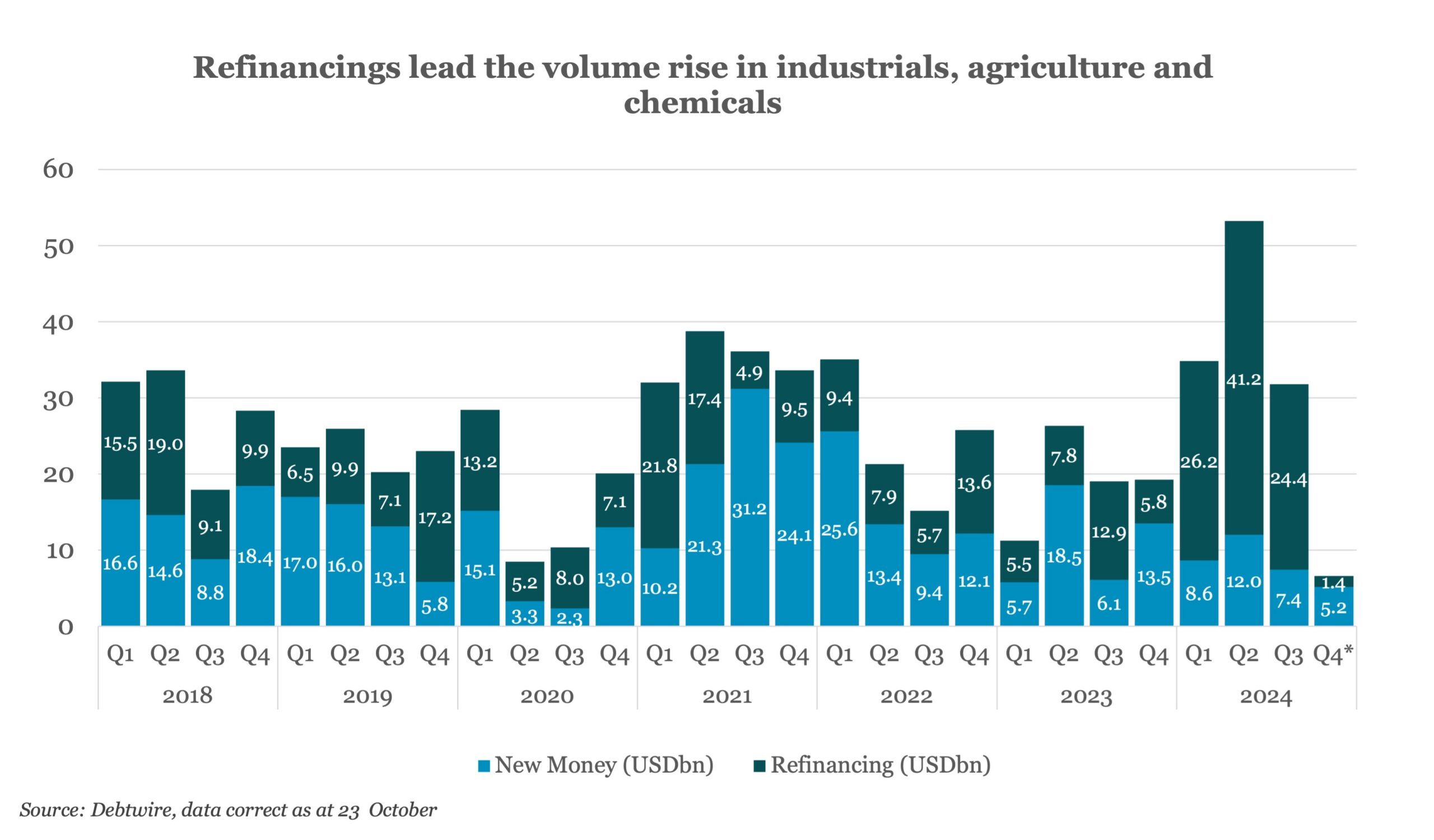
Volumes in the industrials, agriculture, and chemicals sectors have seen a significant surge in the year to date (YTD) compared with 2023, driven by rising industrial demand and falling raw materials costs. Despite geopolitical tensions in the Middle East and China, the sector is expected to continue its upward trajectory.
During 2024 YTD, broadly syndicated loan volumes have ballooned to USD 119.2bn, marking an 111% increase from USD 56.4bn during the same period in 2023.
Chemical brothers
Broadly syndicated loan activity in industrials witnessed a 31% decline year-on-year (YoY) in 2022 to USD 97.2bn (from USD 140.3bn), as domestic demand fell away and interest rates rose. However, the slowdown in demand among US-based firms was partially offset by exports. As a result of Russia’s invasion of Ukraine, high energy costs in Europe made it cheaper for global companies to produce in the US and ship products to Europe rather than use European facilities, according to John Rogers, head of the North America chemicals team at Moody’s Ratings.
The struggle continued into 2023, as rising interest rates and weak industrials take-up hurt profitability, especially in the chemicals industry. Chemicals companies were taking orders below the level of actual demand, as potential customers opted to use up existing stock to avoid expending capital to purchase new products, causing a buildup in inventory for manufacturers. Later in 2023, producers were able to start de-stocking and began to reduce their high-cost inventories.
The industrials landscape started materially improving moving into 2024, as companies buying from chemicals manufacturers had already reduced their inventories and post-pandemic supply-chain disruptions eased. At the same time as these companies were depleted their stocks, demand for new raw materials was waning, reducing producers’ input costs.
“In 2H24, with de-stocking largely done, chemicals companies are seeing increased sales volumes, as their orders reflect the actual level of demand from end-markets or downstream demand,” says Rogers.
Refinancings on the rise
As industrials companies are improving, they are increasingly tapping the broadly syndicated loan market, taking advantage of lower borrowing costs to refinance existing debt that “they could not push off much longer,” explains Rogers.
Refinancing has become a dominant trend in the industrials, agriculture, and chemicals sectors. Of the USD 119.2bn of broadly syndicated loan activity through 3Q24, USD 91.5bn (77%) can be attributed to refinancings. In contrast, refinancings made up only 42% of USD 75.7bn of total loan activity for the whole of 2023.
Tekni-Plex was one of the most recent issuers to replace its jumbo debt stack. The healthcare product manufacturer raised a USD 2bn term loan B (TLB) to repay outstanding debt, saving USD 10m per year in interest costs, according to Moody’s.
Looking ahead
Moving forward, issuance is expected to rise, both in terms of refinancings and new-money deals, as companies improve their financial health.
“Our outlook is positive due to a combination of lower raw materials costs and increased sales volumes, as de-stocking is largely over,” adds Rogers.
Large new-money deals for industrials firms are already cropping up in the market. Earlier this month, Terex issued USD 750m of notes, a USD 1.25bn term loan and an USD 800m revolver to fund its acquisition of Environmental Solutions Group. Meanwhile, Terra Millennium tapped the market for a USD 600m term loan to refinance existing loan debt and support an USD 80m dividend payment.The US trade association, the American Chemistry Council, forecasts 1.5% growth in US chemicals output in 2024 following a 1% decline in 2023, driven by demand for insulation, solar panels, and other materials.
Yet, the sector is vulnerable to global market conditions, including the impact of a wider war in the Middle East and slowing demand from China, says Rogers. If Israel attacks Iran’s oil infrastructure, oil prices could rocket, cascading down to higher input costs for many chemicals companies.
Changes in trade policies and tariffs – a key concern arising from voters in the US presidential election – could also elevate the cost of raw materials and the export potential for US chemicals, according to an industrial’s syndication banker.
The US is a large exporter of both chemicals and plastics because it has very low natural gas prices, according to Rogers. Since a lot of chemicals are used in construction and housing, such as cement, PVC and glass, global housing demand, especially in China, is crucial for the sector. As Chinese demand for housing and consumption remains depressed, this could put a strain on the sector and chemicals prices will remain low.
Yet, the stimulus packages and initiatives coming out China could help offset some of the loss in demand, says the banker.
“Chemical businesses hit their trough in 2023, but are now rebounding, some even faster than expected,” the banker added.
For access to our comprehensive news, analysis and data on the global loan and bond markets, please subscribe to Debtwire.
(Past performance is no guarantee of future results.)



Latest news

US Leveraged Loans Return 3.36% to Investors YTD
The Bloomberg US Leveraged Loan Index (Ticker: LOAN) returned 0.96% in August and has gained an additional 0.28% through September…

PE dry powder
The capital that is being raised is flowing overwhelmingly to the largest, most established managers.

Middle market debt held by BDCs vs High yield vs Treasury yields
The blue line represents the current dividend yield of the VanEck BDC Income ETF (BIZD), which stood at 11.7% as…